On Thursday, 28 December 2023, US President Joe Biden extended the suspension of tariffs on European Union steel and aluminium for the next two years. This decision arrived after the EU announced a suspension of the rebalancing tariffs on US products until March 2025, in the context of the steel and aluminium tariff trade dispute. This is a positive development as the deadline for the reintroduction of the measures was fast approaching. The EU and the US agreed to a two-year pause in 2021. A tit-for-tat between the EU and the US would hurt jobs, prosperity and security on both sides of the Atlantic. We hope that these decisions encourage the transatlantic partners to reach an agreement on this dispute and remove reciprocal tariffs fully and permanently in the coming months.
Steel and aluminium tariff dispute: pause continues
On Thursday, 28 December 2023, US President Joe Biden extended the suspension of tariffs on European Union steel and aluminium for the next two years. This decision arrived after the EU announced a suspension of the rebalancing tariffs on US products until March 2025, in the context of the steel and aluminium tariff trade dispute. This is a positive development as the deadline for the reintroduction of the measures was fast approaching. The EU and the US agreed to a two-year pause in 2021. A tit-for-tat between the EU and the US would hurt jobs, prosperity and security on both sides of the Atlantic. We hope that these decisions encourage the transatlantic partners to reach an agreement on this dispute and remove reciprocal tariffs fully and permanently in the coming months.
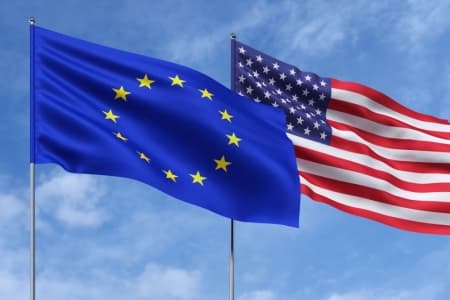
Simultaneously, the EU and the US should agree on a Global Sustainable Steel and Aluminium Arrangement that is compliant with World Trade Organization (WTO) rules and maintain the possibility of including like-minded countries in the initiative. The ongoing conversations should serve as a stepping stone for cooperation between the EU and the US, encouraging them to develop more resilient supply chains, global standards and fair trade practices in the framework of the Trade and Technology Council (TTC). It should also serve as inspiration to reform the WTO, strengthen existing rules on industrial subsidies and continue working on common challenges such as decarbonisation.
This article was edited on Wednesday, 10 January 2024, as a response to the United States’ decision not extend the suspension of tariffs.
Related items

Finding solutions to today's e-commerce challenges
On Thursday, 27 March, AmCham EU hosted a roundtable on how to navigate e-commerce challenges, focusing on tools for customs and enforcement. The first section was devoted to how the EU is addressing today's challenges and how it can expand its toolkit to be more effective. Afterwards participants examined how we can get ahead of future hurdles through uptake of new tools.
During the meeting, participants heard from Vanesa Hernandez Guerrero, Head of Unit, Customs Legislation, Directorate-General for Taxation and Customs Union, European Commission; Walter van der Meiren, Manager, Brokerage Division, UPS; Giulia Buttini, Director, Government Affairs and Public Policy, HP Inc.; Sophie Claessens, Director, EU Public Policy, Tax and Payments, Amazon; Stefano Mauro, Policy Director, e-Logistics and Taxation, Ecommerce Europe; Sabine Van Depoele, Head of Public and Regulatory Affairs, KU Leuven and Pablo Muñiz, Partner, Head of Customs Practice, Van Bael & Bellis.

Modernising customs to support transparent and efficient trade
The rise in e-commerce has transformed trade, but also poses significant challenges for customs enforcement, consumer protection and fair competition. A modern, risk-based customs framework is essential to enhance enforcement capabilities and support legitimate trade. Strengthening public-private cooperation, leveraging digital tools and harmonising enforcement across Member States will help ensure a secure, fair and competitive e-commerce ecosystem that benefits consumers and businesses alike. Learn more about how the EU can build a resilient and future-proof e-commerce framework that supports innovation, transparency and cross-border trade.

Joint statement on modernising customs to enhance global trade
For International Customs Day 2025, AmCham EU is reaffirming our commitment to advancing customs efficiency. In alignment with this year’s theme, we are emphasising the critical need for efficient IT systems, digital solutions and public-private partnerships to streamline global trade processes. These advancements, coupled with investments in workforce training and cutting-edge technologies like AI, will empower customs authorities to facilitate legitimate trade while securing borders. Learn why balanced regulatory frameworks, partnerships and technological advancements are needed to tackle future challenges and make the global trade ecosystem smoother in the joint statement.
Policy priorities
Insights and advocacy driving Europe’s policy agenda. Our priorities support growth, innovation and a stronger transatlantic economy.
Membership
Connecting business and policymakers to strengthen the voice of American companies in Europe.